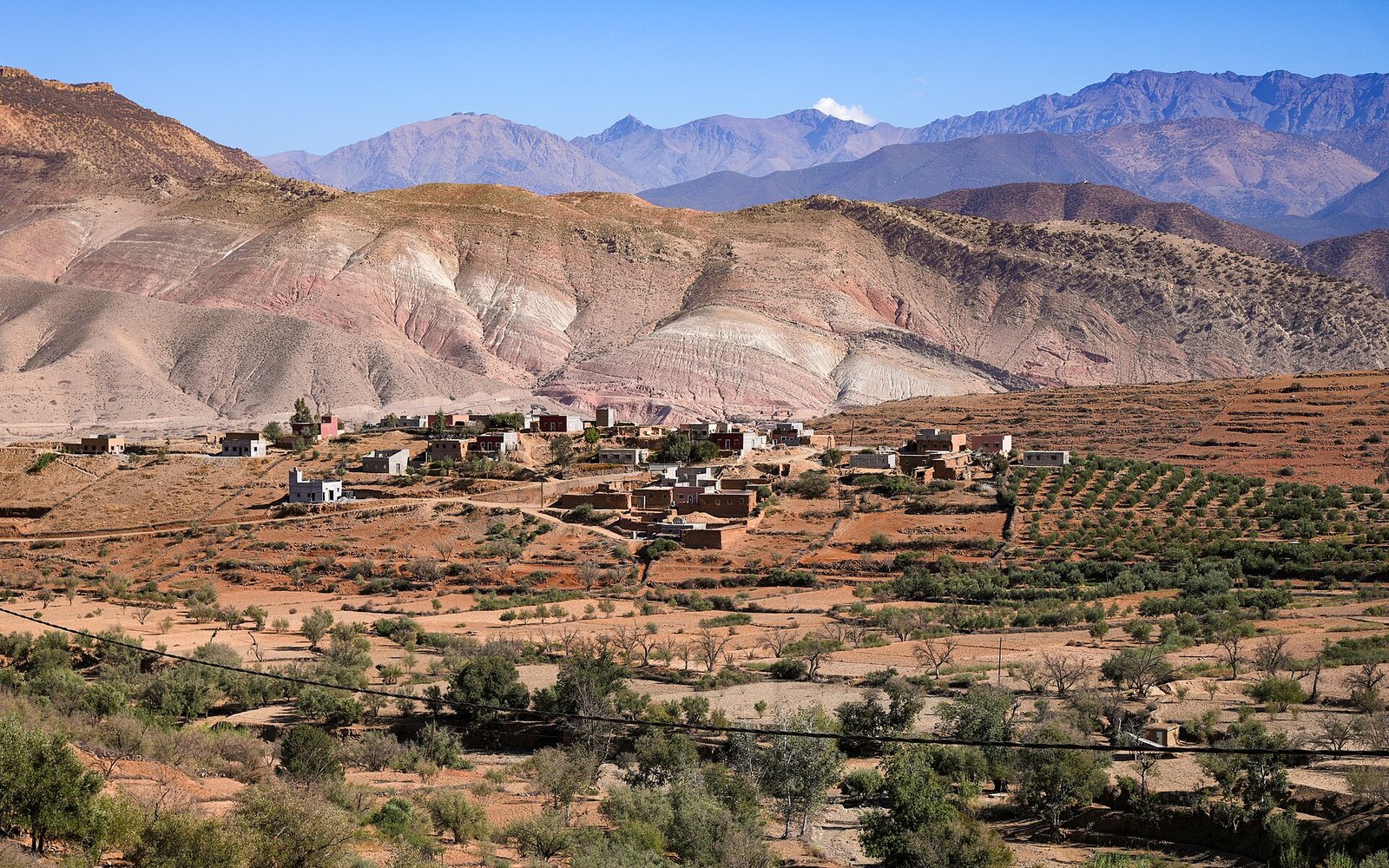
High Atlas Gravel Cycling
High Atlas is one of Morocco's premier gravel cycling regions — compacted gravel piste + mountain road with moderate–expert riding, best in Apr–May & Sep–Nov. North Africa’s highest mountain range and the heart of Moroccan gravel. Passes over 2,000 m, Berber villages above the snow line, and gravel pistes that link valley to valley for days without touching main roads. This guide covers the best gravel tours, gravel routes, terrain, accommodation and how to get there, so you can plan and book your High Atlas gravel cycling adventure with Gravel Morocco.
Overview
North Africa’s highest mountain range and the heart of Moroccan gravel. Passes over 2,000 m, Berber villages above the snow line, and gravel pistes that link valley to valley for days without touching main roads.
Why cycle here
Sustained climbing, alpine light, and the most rewarding descents in the country. The Tizi n’Tichka and Tizi n’TTest are the two great gravel corridors.
Culture
Amazigh (Berber) villages, transhumance tracks, and the Glaoui kasbahs at Telouet.
Frequently asked questions
What is the best time to cycle the High Atlas?
April–May and September–November. The high passes are clear of snow, days are warm, nights are cool, and the light is at its best. Summer is rideable early morning above 2,000 m; winter snow closes the passes.
How hard is the riding in the High Atlas?
Moderate to expert. The climbs to the passes are sustained (8%+ gravel for several kilometres), and the descents are long. You should be comfortable riding 60–90 km with 1,000–1,500 m of climbing on consecutive days.
What is the highest pass we ride?
Tizi n’Tichka at 2,268 m — the highest vehicle pass in Morocco and the flagship gravel climb. Tizi n’Test reaches 2,092 m. Both are rideable on a gravel bike with low gearing.
What accommodation is available?
Mountain guesthouses and kasbah-style lodges in the valleys — clean, comfortable and authentic. Premium tiers use the best lodges in each valley; Budget and Standard use good local guesthouses.
How do I get to the High Atlas from Marrakech?
The foothills above Amizmiz and Ouirgane are about 45 km / 1 hour from Marrakech. The big passes are a 2–3 hour transfer. Transfers from Marrakech are included on multi-day tours.
Can I bring my own bike?
Yes. We help with assembly and box storage in Marrakech. Alternatively we rent well-equipped gravel bikes set up for the local pistes — see our bike rental guide.
Is it safe to cycle in the High Atlas?
Yes. We run a support vehicle on every multi-day tour, carry water and spares, and our guides are local. Traffic is light on the pistes; the main risks are heat and weather, which we manage with timing and support.
What should I pack for a High Atlas trip?
Layered clothing (cold mornings, warm descents), a windproof, sun protection, tubeless setup with sealant and plugs, and low gearing. See our packing guide for the full list.